In our Heart Behind the Homes series, we are pleased to introduce you to the people who guide, design, build, and support each Brookline homeowner’s journey.
Their care and respect for both the craft of homebuilding and the people they serve reflects what Brookline calls “the Brookline way”—a commitment to building with intention and creating homes that become the foundation for everyday life.
“As a member of the greater community, you naturally take a little more pride in the experience.”
Before the floors go down, the cabinets go in, or the keys change hands, someone has to see the whole picture and own every detail.
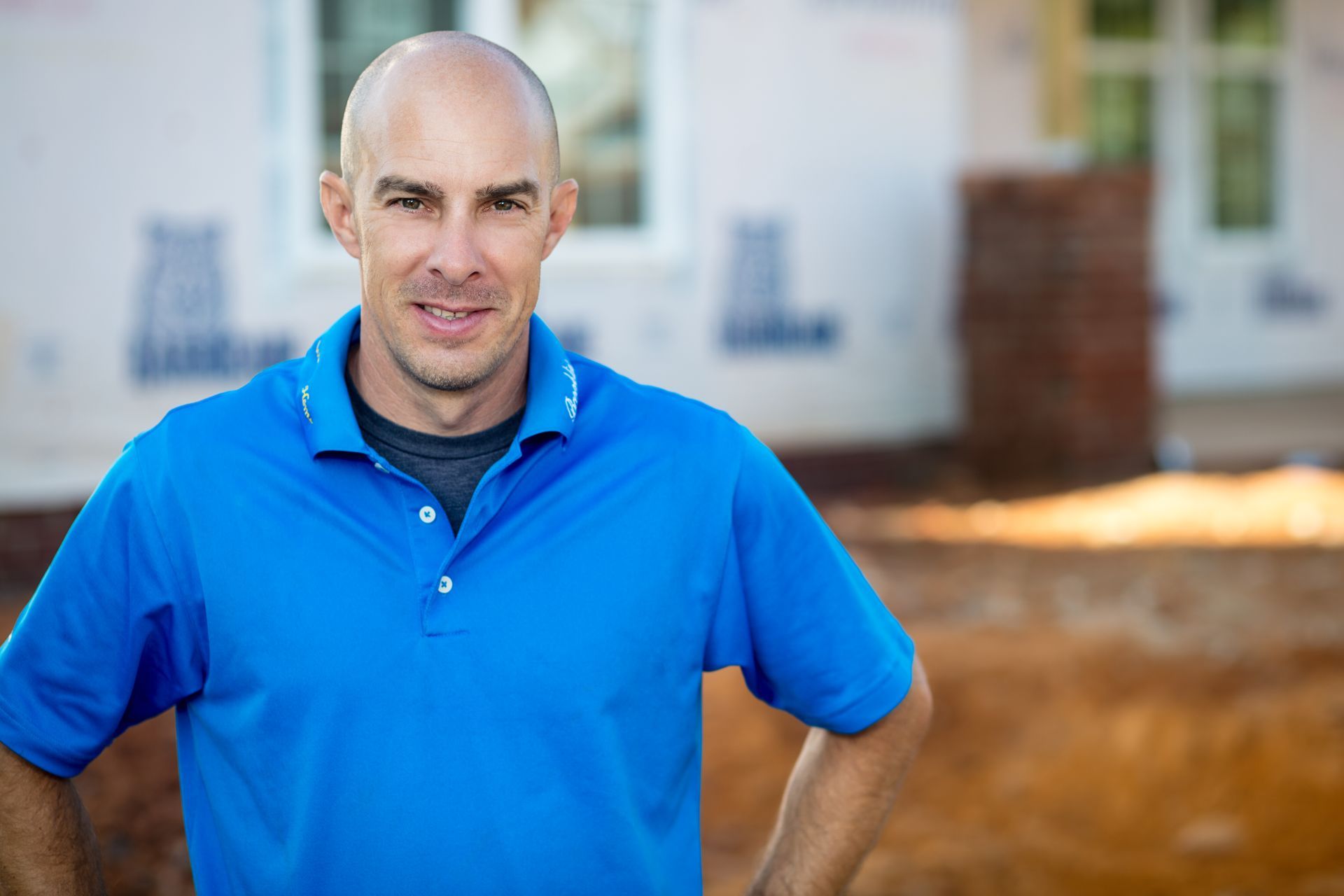
At Brookline Homes, that someone is Nathan Champion.
As Production and Development Manager, Nathan’s team oversees every stage of the build, from evaluating a lot to the day a family walks through the front door of their finished home.
Nathan has called Brookline home for nearly 10 years and Gaston County home for 24. Some of the homes he builds are a few blocks from his own front door.
"There is a bit more pride in building homes in the communities surrounding your own place of residence," Nathan says. "As a member of the greater community, you naturally take a little more pride in the experience."
That pride runs through every stage of the process. Here's what it actually looks like, from the ground up.
Stage 1: Pre-Construction, Site Evaluation and Setting the Foundation for Trust
Ask Nathan what the most important part of building a home is, and he won't say the foundation or the framing. He'll say trust, because without it, nothing else works.
Whether it’s starting a new build from a pre-sale, the purchase of a home already under construction or a completed spec build, Nathan’s team meets with the homebuyer to walk through realistic expectations. Families will know what building a home involves, where things can shift, and what communication will look like throughout the build process and beyond.
“Trust is what makes the experience work for everyone involved," he says.
Then, the physical work begins, and it starts earlier than most buyers expect. Even in Brookline's pre-engineered communities where lots are planned in advance, Nathan's team goes through a careful evaluation before any excavation.
"You still want to make sure the relationship from lot to lot and lot to street, slopes, etc. are correct before you start digging," he explains. "It means taking a good look at the lot and thinking through the final product before you let the sub-contractors place the first bucket in the ground."
By the time shovels break ground, Nathan has already thought through the finished home. It's the kind of upfront thinking that's invisible to the homeowner but shapes every stage that follows.
Stage 2: Framing, Mechanicals, and the Pre-Drywall Walk
Once framing is underway, the home starts to take shape. Nathan’s team starts to put up walls and rooms start to emerge. And before drywall closes everything in, comes one of the most important walkthroughs of the entire build.
The pre-drywall walk gives homeowners a rare window into the bones of their home: the wiring runs, the plumbing lines, the HVAC linesets.
The team makes sure buyers understand what they're looking at and encourages them to take photos for future reference.
"It allows the homeowner to see the bones of the house, things they will never see again," he says. "It gives them a thorough understanding of what makes the house a home."
And practically speaking, those photos can save a lot of headaches down the road, like knowing exactly where a water line runs before hanging a picture.
Stage 3: Coordination and Communication Through the Building Process
During active construction, Nathan’s team is managing multiple crews simultaneously: HVAC, plumbing, electrical, and exterior. Each crew is on their own schedule while still dependent on the others.
"There is no magic wand," he says. "You have to be present in the homes on a daily basis and take note of what is happening each and every day."
If timelines shift, Nathan's approach is to always be honest.
"I can't think of any other products that you purchase where the buyer has the opportunity to see all the good and bad parts as you transition through to their end product," he says. "I promise you that $85,000 car you just bought didn't always look as good as it did the day you were handed the keys. You just didn't see the mistakes that were made as it was coming together."
A home is different. Buyers are able to go by the site, watching it happen. How you communicate through the inevitable bumps, Nathan says, is what determines whether the experience feels like a partnership or a transaction.
Stage 4: Interior Finishes and the Homeowner Orientation
As the build moves into interior finishes, the home starts to feel like the buyer's own. Brookline's selection process is designed to make that personalization manageable without sacrificing quality.
The homebuyers meet with the sales team upfront to select the color package they like. These are curated combinations of countertops, flooring, and cabinetry, along with appliance tiers and, depending on the community, exterior color options. In the case of a speculative build, the sales and design teams carefully decide which package would best suit that build.
"This helps us be more efficient and less prone to errors while still offering the buyer a great selection of options," he says.
About a week before closing, Nathan’s team meets with buyers one more time for the Homeowner Orientation.
By this point, most people are mentally already moving furniture. Nathan makes sure they don't skip past the essentials, like how to shut off the water, power, and gas in an emergency. And even how to navigate Brookline's warranty process if something comes up after move-in.
"As we all know, no matter how much we always want to avoid any warranty issues, they can be a reality of new things," he says.
From Empty Lots to a Loving Neighborhood
For Nathan, every stage of the build comes back to the same thing: A family is about to make a home out of what was just an empty lot.
"It’s easy to get lost in the daily grind of moving on to the next one," he says. "But it is nice to stand back and realize that what you see and do as a means to pay your own bills is actually creating a home for others and a place where they will create a ton of good memories."
Since he lives a couple of blocks from one of the communities he built, the families inside still wave when they see him. Some of them stop to chat. A few have called years later with questions and he's always picked up.
Ten years in, Nathan has watched a lot of empty lots turn into places where people put down roots. That front row seat is the best part of the job.